
Organisms and Populations: One Mark Questions, Book Back Answers and Notes
This chapter covers the basics of ecology: how organisms respond to abiotic factors such as temperature, light, water and soil, the difference between habitat and niche, biomes and adaptations. It then moves to populations, their attributes, J-shaped and S-shaped growth, and the interactions between species such as mutualism, competition, predation and parasitism.
Study this chapter
Asked in previous board exams
10 questions from this chapter came in 7 past public exams. Open any of them to see the answer and explanation.
-
March 2026
The relationship between sucker fish and shark is ________.See answer in the solved paper →
-
March 2026
The term "Niche" was first used by ________.See answer in the solved paper →
-
March 2025
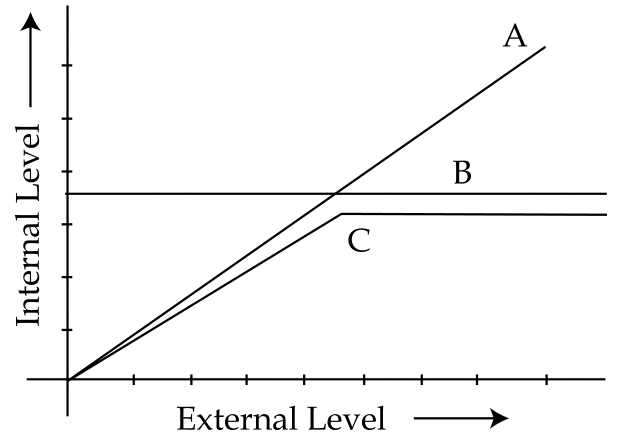
The figure given below is a diagrammatic representation of response of organisms to abiotic factors. What do A, B and C represent respectively ?See answer in the solved paper →
-
March 2024
Which of the following is an r-species ?See answer in the solved paper →
-
March 2023
Competition between species leads to :See answer in the solved paper →
-
March 2023
Animals that can move from Fresh water to Sea water :See answer in the solved paper →
-
May 2022
Organisms which can survive a wide range of temperature are called ________.See answer in the solved paper →
-
May 2022
Which one of the following is a suitable adaptation to overcome food and water scarcity?See answer in the solved paper →
-
Supplementary 2021
Animals that can move from freshwater to seawater are called as :See answer in the solved paper →
-
March 2020
Which of the following group of animals are the common fauna of the Thar deserts ?See answer in the solved paper →
About Organisms and Populations
Medium ~120 min study
Ecology is the study of how organisms relate to their surroundings and to each other. Every living thing is shaped by its environment, and it also changes that environment in small ways. The chapter works up the levels of organisation: the individual organism, the population, the community and finally the biome.
It starts with the physical factors. Temperature, light, water and soil decide how an organism's body works and how it behaves. Those individual responses then add up to population features such as density, birth rate, death rate and the shape of the growth curve when resources run short. The same ideas explain how communities are built and how they react when conditions change, naturally or because of human activity.
When you revise, learn three rules by name and statement: Bergmann's rule, Allen's rule and Van't Hoff's rule. Learn the two growth curves and what carrying capacity (K) means. Finally, memorise the table of interactions with their signs, such as (+, +) for mutualism and (-, 0) for amensalism, along with one textbook example for each.
What you'll learn
- Name the main abiotic factors and describe how each affects the physiology of organisms.
- Tell habitat and ecological niche apart with a suitable example.
- Explain how regulators, conformers and animals that migrate or become dormant deal with environmental stress.
- Describe the structural and behavioural adaptations seen in organisms of different biomes.
- Compare exponential and logistic growth and explain the meaning of carrying capacity.
- Classify interactions between species as positive or negative and give an example of each.
Before you start
- The levels of ecological organisation, from organism to biosphere.
- Food chains, trophic levels and the basic structure of an ecosystem.
- Basic ideas of natural selection, variation and adaptation.
Topics covered in this chapter
Organisms and Populations explained
Organisms, Their Environment and Populations
Abiotic Factors
Every organism lives in a medium shaped by physical and chemical factors. Temperature is the most important of these. It controls the rate of metabolism and enzyme activity, and Van't Hoff's rule states that the rate of a reaction roughly doubles for every 10°C rise in temperature. Light, through its intensity and wavelength, affects photosynthesis, biological rhythms and the movement of animals. Water is the universal solvent and the medium for transport in the body. Ice floats on water, so a frozen lake surface insulates the water below and aquatic animals survive the winter. Soil forms through weathering of rocks, and its minerals and texture support plant growth and the animals that burrow in it.
Habitat and Ecological Niche
Habitat is the physical place where an organism lives, with its own set of biotic and abiotic conditions. Niche is the organism's functional role in the community: what it eats, where it feeds and how it interacts with others. Several species can share one habitat but still have different niches. In a pond, for example, different fishes feed at the surface, in the middle of the water column or at the bottom, and their mouth structure suits that feeding level. This keeps them from competing directly.
Biomes
A biome is a large region with a typical climate, soil and vegetation. Terrestrial biomes such as grassland, desert, tropical rainforest and tundra are identified mainly by their dominant plants, and they change with latitude and altitude as temperature changes. Aquatic biomes include freshwater, brackish water and marine habitats, and water covers about 71% of the Earth's surface. The organisms of each biome show body and physiological features suited to that shared climate.
Responses to Abiotic Stress
Regulators keep their internal conditions, such as body temperature and osmotic concentration, constant by spending energy. Conformers cannot do this, so their internal state changes with the surroundings. When stress becomes severe, some animals migrate for a while. Others become inactive through dormancy, hibernation in winter or aestivation in summer. Over long periods, natural selection has fixed structural, physiological and behavioural adaptations, such as the water-saving physiology of the camel and the thick fur and fat layers of polar animals.
Population Attributes and Interactions
A population is a group of interbreeding individuals of the same species living in a given area. It has features that a single individual does not have: density, natality (birth rate), mortality (death rate) and age distribution. With unlimited resources a population grows exponentially and gives a J-shaped curve. With limited resources, growth slows and levels off at the carrying capacity, giving the S-shaped (sigmoid) logistic curve. Populations of different species also interact. Mutualism and commensalism are positive interactions. Competition, predation, parasitism and amensalism harm at least one partner. Together these interactions decide how a community is structured and how energy flows through it.
Common mistakes to avoid
- Using habitat and niche as if they mean the same. Habitat is the organism's address; niche is its profession, that is, what it does in the community.
- Assuming all animals regulate their body temperature. Most animals and nearly all plants are conformers, and their internal state follows the environment.
- Mixing up the two growth curves. The J-shaped exponential curve assumes unlimited resources; the S-shaped logistic curve levels off at the carrying capacity K.
- Confusing amensalism with commensalism. In amensalism one species is harmed and the other is unaffected (-, 0); in commensalism one benefits and the other is unaffected (+, 0).
- Thinking competition happens only between different species. Individuals of the same species need exactly the same resources, so intraspecific competition is often more intense.
Test yourself on these with the practice test, then check the worked reasoning in the solved MCQs.
Frequently asked questions
What is the difference between habitat and niche?
Habitat is the physical place where an organism lives, together with its biotic and abiotic surroundings. Niche is the role and position of the organism in its community, including what it feeds on and how it interacts with other species. Many species can share a habitat, but they usually occupy different niches, which reduces competition.
What are eurythermal and stenothermal organisms?
Eurythermal organisms can tolerate a wide range of temperatures. Stenothermal organisms survive only within a narrow temperature range. This tolerance decides where a species can live, so stenothermal species are restricted to fewer regions than eurythermal ones.
How do animals adapt to cold climates?
Cold-climate animals are built to save heat. Bergmann's rule states that animals of colder regions tend to have larger bodies, which gives a smaller surface area relative to volume. Allen's rule states that they have shorter ears and limbs, which reduces heat loss. Many also have thick fur or a layer of fat (blubber).
What is the difference between conformers and regulators?
Regulators keep internal conditions such as body temperature and osmotic concentration constant, whatever the outside conditions. Conformers cannot maintain this homeostasis, so their body temperature or osmotic concentration changes with the environment. Most animals and plants are conformers and depend on behaviour or other adaptations to handle stress.
What are exponential and logistic growth models?
Exponential growth happens when resources are unlimited, and the population curve is J-shaped. Logistic growth happens when resources are limited: growth slows as numbers rise and the population levels off at the carrying capacity, giving an S-shaped or sigmoid curve. Natural populations usually follow the logistic pattern because of environmental resistance.
What is mutualism? Give an example.
Mutualism is an interaction in which both species benefit (+, +). The textbook gives the hermit crab and sea anemone. The crab carries the sea anemone on its shell to new feeding places, and the stinging cells of the anemone protect the crab from predators. Small birds cleaning the teeth of a crocodile is another example.
What is the competitive exclusion principle?
Proposed by Gause, it states that two closely related species competing for the same limiting resources cannot live together indefinitely in the same niche. The better competitor eventually eliminates the other. To coexist, the species must divide the resource, for example by feeding at different times or places.
Last updated 15 September 2026