
Principles of Inheritance and Variation: One Mark Questions, Book Back Answers and Notes
This unit explains multiple alleles and the ABO blood groups, the genetics of the Rh factor, sex determination in humans, birds and honeybees, sex-linked inheritance and dosage compensation, karyotyping and pedigree analysis, Mendelian and chromosomal disorders, cytoplasmic inheritance, and eugenics, euphenics and euthenics.
Study this chapter
Asked in previous board exams
10 questions from this chapter came in 7 past public exams. Open any of them to see the answer and explanation.
-
March 2026
This pedigree symbol represents:See answer in the solved paper →
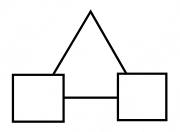
-
March 2025
Find out the wrongly matched pair.See answer in the solved paper →
-
March 2024
ABO blood group in man is controlled by :See answer in the solved paper →
-
March 2023
ZW-ZZ system of sex determination occurs in :See answer in the solved paper →
-
May 2022
When a Drosophila body cells contain 3 sets of autosomes and 2 X chromosomes, what will be the sex of the fly?See answer in the solved paper →
-
May 2022
ABO blood group in man is controlled by:See answer in the solved paper →
-
Supplementary 2021
XO type of sex determination and XY type of sex determination are examples of :See answer in the solved paper →
-
Supplementary 2021
What is the sex of Drosophila which possess 2A + XXY chromosomes ?See answer in the solved paper →
-
March 2020
If the Child’s blood group is ‘O’, the father’s blood group is ‘A’ and the mother’s blood group is ‘B’, the genotypes of the parents will be :See answer in the solved paper →
-
March 2020
Assertion (A) : XX - XO type of sex determination is seen in bedbugs, cockroaches and grasshoppers.See answer in the solved paper →
Reason (R) : The sex of the offspring depends upon the sperm that fertilizes the egg.
About Principles of Inheritance and Variation
Hard ~150 min study
Mendel's laws explain simple pairs of dominant and recessive traits. This chapter takes those laws into human genetics, where the patterns are often less simple. The gene is still the unit of heredity, but a trait may be controlled by more than two alleles, may depend on genes carried on the sex chromosomes, or may be passed only through the mother.
These ideas answer questions students often ask. Why does a trait seem to skip a generation? Why is colour blindness far more common in boys? How can a child have a blood group different from both parents? The chapter also teaches two practical tools, pedigree charts and karyotypes, which doctors use to trace a disorder in a family and to spot abnormal chromosomes.
Exam questions from this chapter often involve working out blood group crosses, identifying the heterogametic sex, reading a pedigree, or naming the chromosome count of a syndrome. Practise crosses on paper; the logic matters more than memorised statements.
What you'll learn
- Explain multiple alleles using the ABO blood groups, and describe how the Rh factor is inherited.
- Distinguish male heterogamety from female heterogamety with examples from humans, insects and birds.
- Work out the inheritance of X-linked recessive disorders such as haemophilia and colour blindness.
- Describe how a karyotype is prepared and how it is used to detect chromosomal abnormalities.
- Read a pedigree chart and decide whether a trait is autosomal or sex-linked, dominant or recessive.
- Distinguish eugenics, euphenics and euthenics.
Before you start
- Mendel's laws, including dominant and recessive traits and monohybrid crosses.
- Mitosis and meiosis.
- Basic ideas of chromosomes, genes and DNA.
Topics covered in this chapter
Principles of Inheritance and Variation explained
Inheritance and Variation in Humans
Multiple Alleles and Human Blood Groups
Multiple alleles are three or more alternative forms of a gene at the same locus that control one character. A diploid person carries only two of them. The human ABO blood group is the standard example: it is controlled by an autosomal gene on chromosome 9 with three alleles, IA, IB and IO. IA and IB are codominant with each other, and both are dominant over IO. This gives six genotypes but only four phenotypes: A, B, AB and O. The Rh factor is another inherited blood antigen. Knowing a person's Rh type is needed for safe transfusions and for managing pregnancy in an Rh-negative mother carrying an Rh-positive baby, where haemolytic disease of the newborn can occur.
Chromosomal Basis of Sex Determination
Sex determination is the mechanism that decides whether an individual develops as male or female. In many animals it depends on sex chromosomes. When one sex produces two kinds of gametes, that sex is called heterogametic. Humans and Drosophila show male heterogamety (XX female, XY male). Birds show female heterogamety (ZW female, ZZ male). Honeybees use haplodiploidy: unfertilized eggs develop by parthenogenesis into haploid males, and fertilized eggs develop into diploid females.
Sex-Linked Traits and Dosage Compensation
Genes on the X chromosome follow a criss-cross pattern: a trait passes from a father to his grandson through a carrier daughter. X-linked recessive disorders such as haemophilia and colour blindness are much more common in males, because a male has only one X chromosome. He is hemizygous, so a single recessive allele is expressed. In mammalian females, one of the two X chromosomes is inactivated and condensed into a Barr body. This dosage compensation, also called lyonization, means both sexes have one active X and make similar amounts of X-linked gene products.
Karyotyping, Pedigree Analysis and Disorders
A karyotype is made by photographing chromosomes at metaphase and arranging them in homologous pairs by size and shape. It shows the sex of a person and reveals numerical or structural abnormalities. Pedigree analysis uses standard symbols to trace a trait through several generations of a family and is used in genetic counselling. Together they help identify Mendelian (single-gene) disorders such as thalassemia and sickle cell anaemia, and chromosomal disorders such as Down syndrome, Turner syndrome and Klinefelter syndrome, which mostly arise from non-disjunction of chromosomes during meiosis.
Extra-Chromosomal Inheritance and Human Improvement
Some traits are controlled by genes outside the nucleus, in mitochondria (and chloroplasts in plants). This extra-chromosomal or cytoplasmic inheritance shows a maternal pattern, because the egg supplies almost all the cytoplasm and organelles of the zygote, while the sperm contributes mainly its nucleus. The chapter ends with three approaches to improving the human race. Eugenics applies the laws of heredity to improve the germplasm. Euphenics treats the symptoms of inherited diseases. Euthenics improves the environment, through better nutrition, education and living conditions, to improve human qualities.
Common mistakes to avoid
- Confusing multiple alleles with polygenic inheritance. Multiple alleles are several forms of one gene at one locus; polygenic inheritance involves several different genes acting on one trait.
- Assuming girls can never be colour blind. A female who inherits the recessive allele on both X chromosomes is colour blind; it is just much rarer than in males.
- Getting the heterogametic sex in birds the wrong way round. In birds the female is ZW (heterogametic) and the male is ZZ, the opposite of humans.
- Expecting cytoplasmic traits to follow Mendelian ratios. They do not; they pass mainly through the mother because the egg supplies the organelles.
- Mixing up eugenics and euphenics. Eugenics tries to improve the genetic makeup of the population; euphenics treats the symptoms of genetic diseases in individuals.
Test yourself on these with the practice test, then check the worked reasoning in the solved MCQs.
Frequently asked questions
What is multiple allelism with an example?
Multiple allelism is when a gene has three or more alleles at the same locus, all controlling the same trait. Each person still carries only two of them. The human ABO blood group is the classic example: it is controlled by three alleles, IA, IB and IO, of an autosomal gene on chromosome 9.
How is sex determined in human beings?
Humans have one pair of sex chromosomes, also called allosomes. Females are XX and produce only X-bearing eggs, so they are homogametic. Males are XY and produce X-bearing and Y-bearing sperm in equal numbers, so they are heterogametic. The sex of the child is decided at fertilization by which type of sperm fertilizes the egg.
Why is hemophilia called bleeder's disease?
A person with haemophilia does not have a normal clotting substance in the blood; the textbook names it thromboplastin. So even a small cut can bleed for a long time, and without treatment this can be fatal. The allele is recessive and located on the X chromosome, which is why the disease is seen mostly in males.
What is the difference between Down's syndrome and Turner's syndrome?
Down syndrome is an autosomal disorder caused by an extra copy of chromosome 21 (trisomy 21), giving 47 chromosomes. Turner syndrome is a sex chromosome disorder in females who have only one X chromosome (44 + XO), giving 45 chromosomes. Such females are short, have a webbed neck and have underdeveloped ovaries, so they are sterile.
What does cytoplasmic inheritance mean?
Cytoplasmic inheritance is the passing on of traits controlled by genes outside the nucleus, in organelles such as mitochondria and chloroplasts. The egg provides nearly all the cytoplasm and organelles of the zygote, while the sperm contributes mainly its nucleus, so these traits are inherited from the mother.
What are eugenics, euphenics, and euthenics?
Eugenics tries to improve the genetic quality of the human population by encouraging desirable traits and reducing defective ones. Euphenics is the medical treatment of inherited disorders so that affected people can live normally, especially inborn errors of metabolism such as phenylketonuria (PKU). Euthenics improves human qualities by improving the environment: nutrition, education and clean surroundings.
What is the purpose of karyotyping?
Karyotyping arranges and photographs the full set of chromosomes of a dividing cell at metaphase. It is used to find the sex of an individual, to compare species and study evolutionary relationships, and to diagnose disorders caused by abnormal chromosome number or structure, such as Down or Klinefelter syndrome.
Last updated 15 September 2026